We use cookies to make your experience better. To comply with the new e-Privacy directive, we need to ask for your consent to set the cookies. Learn more.

ADC Workflow

Solutions for every step

of your ADC workflow


Whether you’re producing a standard mAb or multispecific antibody, or taking your antibody through conjugation to an ADC,

get the buffers and reagents you need for each step of your process, from cell culture to final formulation and release.

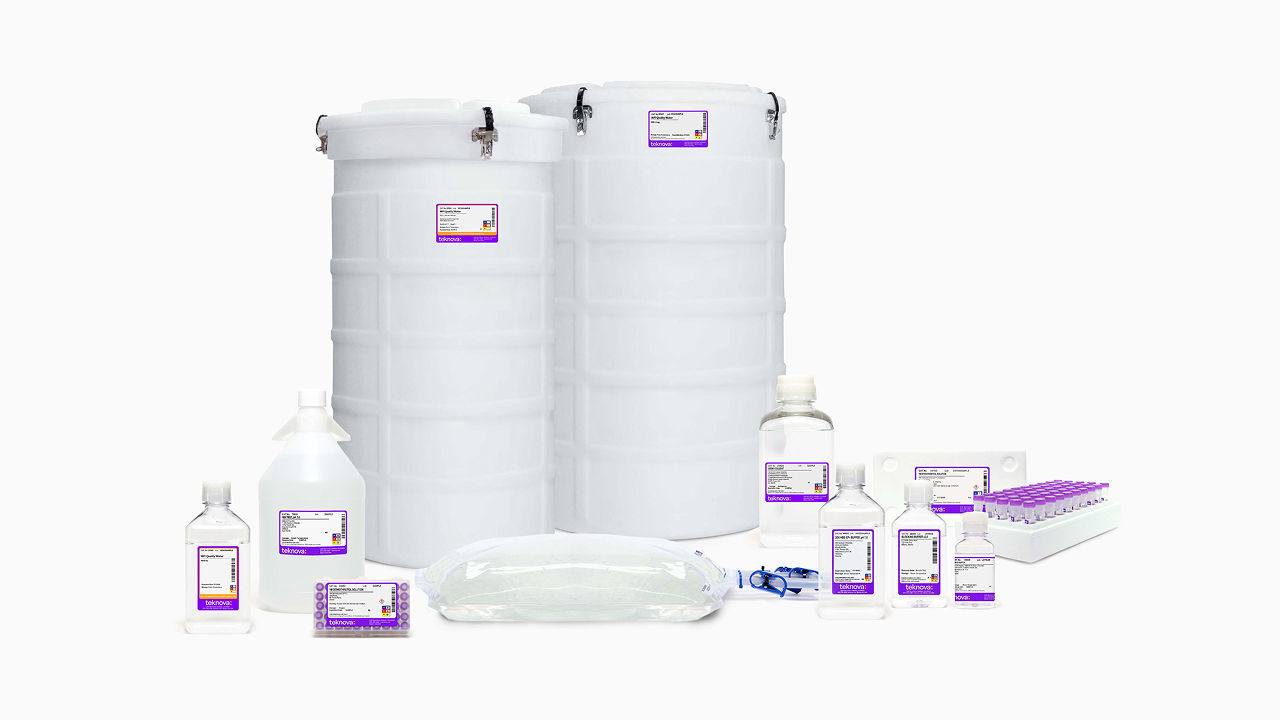
Choose off-the-shelf products, or have us make custom formulations to your exact specifications.


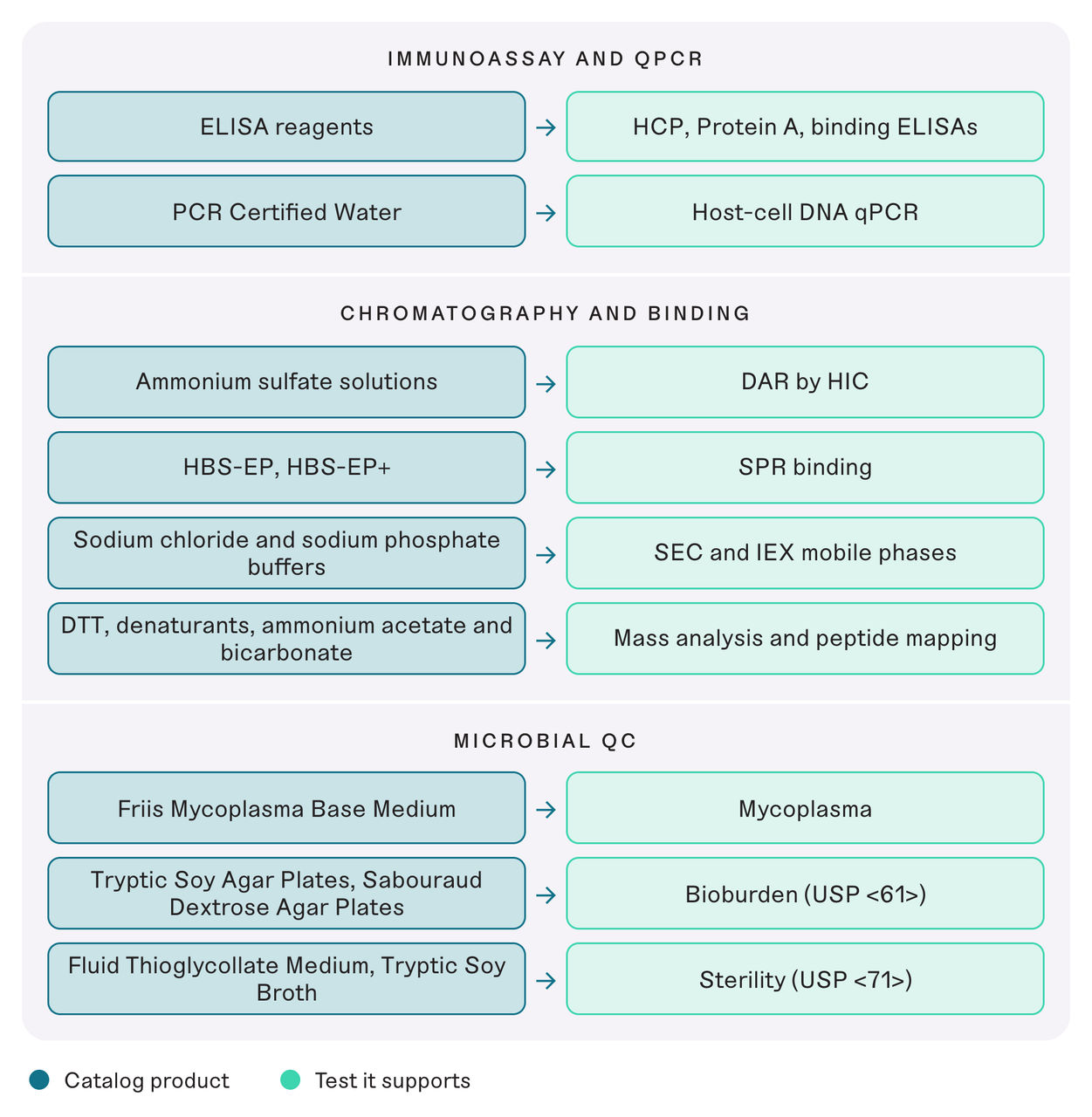
We also offer reagents for your ELISA, qPCR, HIC, mass analysis, SPR, SEC, IEX, and microbial testing.

Cell Culture and Harvest

Support your upstream process from seed train through production. Feed your culture with our concentrated glucose solutions and protect cells from shear with Poloxamer 188. During development, keep foam-related cell stress in check with Antifoam 204.

If you have a cell culture media formulation, or a powder you need hydrated, our experts can make it to your specifications, with the fill volumes and QC testing your process needs. We can also formulate custom feeds and other upstream additives.


For microbial QC, see our reagents for analytical testing.

Cell Culture and Harvest Products
Clarification

Get your harvest ready for capture. Centrifugation and depth filtration clear cell debris, and depth-filter trains are commonly wetted and flushed, then equilibrated and chased with a Tris–sodium chloride buffer around pH 7.4–7.6. Our WFI Quality Water and ready-to-use Tris–sodium chloride buffers cover both steps, or you can dilute our 20X TBS or build from our 1M Tris-HCl and 5M Sodium Chloride concentrates. At production scale, PBS in 20 L and 200 L bags is an alternative. If your process includes an acid-precipitation step, our citric acid solution adjusts harvest pH.
 

Every filter train is a little different, so we can also manufacture custom wetting, flush, and chase buffers that are tailored to your specific process.

Clarification Products
Custom wetting, flush, and chase buffers

Tell us about your depth filters and process conditions, and we'll formulate a solution to your specifications. With our flexible Fill•Tek™ dispensing system, we can fill your custom buffers in single-use bags from 250 mL to 200 L, with connectors that fit your existing system.

Capture Chromatography

Capture your antibody from clarified harvest on Protein A, which binds the Fc region at neutral pH and releases it at low pH. Equilibrate and wash your column at pH 7.0–7.5 with our PBS, available in GMP-grade 20 L and 200 L bags, or with our Tris–sodium chloride buffer. Add a high-salt wash with our 5M Sodium Chloride to remove weakly bound host cell proteins and DNA before elution.
 

Elute at pH 3.0–3.6 with our endotoxin-tested sodium acetate, sodium citrate, or glycine buffers. Choose acetate or citrate to carry your eluate straight into the low-pH viral inactivation hold, or glycine at pH 3.0 for tightly binding antibodies. Clean and sanitize your column with our GMP 0.5M Sodium Hydroxide, and store it in 20% Ethanol between runs. Then quantify host cell protein, residual Protein A, and host-cell DNA in your eluate pool with our reagents for analytical testing.

Capture Chromatography Products
Custom Protein A wash buffers

Intermediate washes are where Protein A processes differ most. Tell us about your resin and wash strategy, whether arginine, high-salt, or intermediate-pH, and we can formulate each buffer to your specifications.

Antibody Polishing

Polish your antibody with buffers matched to the pH and conductivity each step needs. Polishing follows the low-pH viral inactivation hold on your Protein A eluate, so adjust the eluate to pH 3.5–3.8 with our Acetic Acid Solutions for the hold, then neutralize with Tris Base.


For cation-exchange (CEX), run in acetate buffers made from our Sodium Acetate and Acetic Acid Solutions or in our 50mM MES buffer, then strip or step-elute with our high-salt MES buffer. For anion-exchange (AEX), use Tris Base or our Tris–sodium chloride buffer.


Adjust load conductivity with our 5M Sodium Chloride, clean and sanitize columns between runs with our GMP Sodium Hydroxide Solutions, and store them in 0.1M Sodium Hydroxide or 20% Ethanol, depending on your resin. We can also manufacture custom flow-through AEX buffers, and flush and chase buffers for the virus filtration step that follows, tailored to your process.

Antibody Polishing Products
Build all your custom polishing buffers in Build•Tek™


Multispecifics often need extra polishing runs, and every run adds buffers to source and track. Specify them all in a single quote request with our AI-powered Build•Tek™ custom configurator, and we'll formulate each one to your specifications, filled in the formats and volumes each run needs.

Conjugation

Whether you conjugate through cysteines or lysines, we supply the reduction and reaction-buffer components that allow you to build a standard ADC, a bispecific ADC, or a degrader-antibody conjugate (DAC). Buffer-exchange your mAb intermediate into reaction conditions and fine-tune pH with our sodium phosphate buffers, including 1 M monobasic and dibasic stocks.


For cysteine conjugation, use DTT for the partial reduction that opens up interchain disulfides for maleimide-thiol coupling (typically pH 6.5–7.5), then remove it by buffer exchange before conjugation begins, since its free thiols compete with the maleimide-linker-payload. Add EDTA to your reaction buffer to chelate trace metals and keep freed thiols in their reduced state, and use our 1M Tris-HCl, pH 9.0, for post-conjugation maleimide-ring hydrolysis after quenching unreacted linker-payload.


For lysine (NHS-ester) chemistries, which run at roughly pH 7.2–8.5, choose our 500mM Sodium Phosphate, 1M HEPES, or 10X Borate Saline Buffer, amine-free options that keep competing primary amines, like those in a Tris buffer, out of your reaction.


We’ll custom-formulate your full conjugation reaction buffer, including co-solvent, quench reagent, and post-conjugation buffer-exchange needs, to your specifications.

Conjugation Products
Reducing with TCEP instead of DTT?

Tell us about your reduction conditions, and we'll formulate a custom TCEP buffer to your specifications.

ADC Polishing

Purify your conjugate and exchange it into formulation buffer. Tangential flow filtration (TFF/UF-DF) is the primary purification step after conjugation, clearing free drug-linker and residual solvent. Run the diafiltration with our histidine buffers, and use WFI Quality Water for diluting concentrates.

Hydrophobic interaction chromatography (HIC) is mainly used analytically to resolve and quantify the drug-to-antibody ratio (DAR) distribution that defines product quality, though some programs also run it preparatively. For preparative HIC, start from our 1M Ammonium Sulfate / 10mM Tris-HCl solution, formulated as a ready mobile phase, or build a custom gradient from our more concentrated Ammonium Sulfate stocks.


For analytical HIC, reduced mass analysis, and SEC and IEX mobile phases, see our reagents for analytical testing.

ADC Polishing Products
Final Formulation and Release

Take your drug product from formulation through release testing. For a naked mAb, diafilter your purified antibody into formulation buffer.


Many antibody and ADC drug products are formulated in histidine, succinate, acetate, or citrate buffers around pH 5–7. We carry endotoxin-tested histidine, acetate, and citrate buffers and a 1M succinic acid stock, plus premixed histidine-sucrose (pH 5.5), citrate-sucrose (pH 6.0), and acetate-sucrose (pH 5.5) buffers for programs that want buffer and sugar ready to use.


Sucrose serves as a lyoprotectant for lyophilized formulations, and we also carry sorbitol as a stabilizer and tonicity agent and polysorbate 20 as a surfactant. If your formulation calls for trehalose or polysorbate 80, we can formulate it to your specifications. Most of these formulation reagents are supplied as research-grade material for development work, so talk to us about GMP-grade options as your program moves toward the clinic.


For bioburden, sterility, and the rest of your release testing, see our reagents for analytical testing. Free-drug, DAR, residual-solvent, and cell-based potency testing round out a typical ADC release panel, and our experts can help you find the right reagent support for each.

Final Formulation and Release Products

Shop Final Formulation and Release Products

Reagents for your analytical testing

Alongside your process buffers, we supply the reagents your QC team needs to test what you make. For process-related impurities, run host cell protein (HCP) and residual Protein A ELISAs with our ELISA reagents and quantify residual host-cell DNA by qPCR with our PCR Certified Water.


To characterize the product itself, resolve the drug-to-antibody ratio (DAR) distribution by hydrophobic interaction chromatography (HIC) with our ready ammonium sulfate mobile phase, or build a custom gradient from our ammonium sulfate stocks. Our sodium chloride and sodium phosphate buffers support high-salt SEC mobile phases and IEX gradients for aggregate and charge-variant analysis.


Our DTT, denaturants, and MS-compatible buffers prepare samples for intact, middle-up, and reduced mass analysis and peptide mapping. For binding, run ELISAs with the same reagents, or surface plasmon resonance (SPR) binding and target-engagement studies on Biacore and similar systems with our HBS-EP buffers.


For microbial QC, prepare broth for culture-based mycoplasma methods with our Friis Mycoplasma Base Medium. Our ready-to-use Tryptic Soy Agar and Sabouraud Dextrose Agar Plates cover in-process bioburden under USP <61> for total aerobic and total yeast and mold counts, and our Fluid Thioglycollate Medium and Tryptic Soy Broth cover USP <71> sterility testing.

Analytical Testing Reagents

Prepare ADC samples for intact, middle-up, and reduced mass analysis. Reduce IdeS-digested subunits with our DTT, denature with Guanidine Hydrochloride or Urea, and exchange into MS-compatible Ammonium Acetate. Digest for peptide mapping in our Ammonium Bicarbonate Buffer.

Run surface plasmon resonance (SPR) binding and target-engagement studies with HBS-EP and HBS-EP+ running buffers.

Prepare broth for culture-based mycoplasma testing with our Friis Mycoplasma Base Medium, and run bioburden (USP <61>) and sterility (USP <71>) testing with our Tryptic Soy Agar Plates, Sabouraud Dextrose Agar Plates, Fluid Thioglycollate Medium, and Tryptic Soy Broth.

Build your custom reagent in minutes with Build•Tek

Our AI-powered Build•Tek custom configurator guides you through formulation, container format, grade, and QC testing for every buffer in your workflow, including the custom polishing buffers multispecifics call for. Specify multiple products in one request in minutes and get a quote in days.


Need custom buffers fast? Add Express•Tek℠ Production to your quote request to expedite your order.

Get custom bag sizes from a single lot with Fill•Tek™

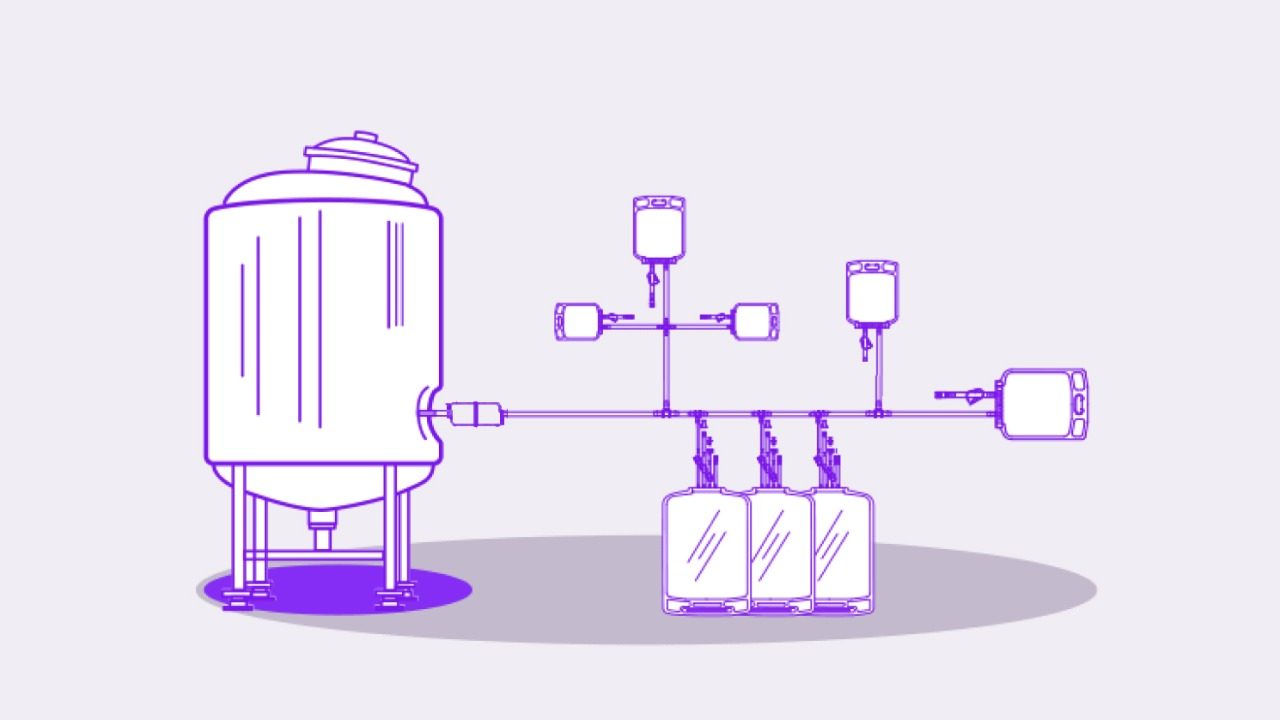
With our Fill•Tek dispensing system, you can specify your bag size and quantity, or mix and match sizes from 250 mL to 200 L, then tailor fill volume, QC samples, and connectors. Fill•Tek orders dispense from a single lot through a single filter, so you get one COA for your order. When a polishing train calls for many buffers, you can fill each one in the bag sizes your runs need.

Illustration of the Fill•Tek dispensing system for single-use bags
Plan your path from RUO to GMP

Read our white paper, Streamlining the Transition from RUO to GMP, for key process development considerations that help you accelerate scale-up and tech transfer for emerging therapies.


Our ADC experts are here to help every step of the way

Our process engineers, manufacturing specialists, and quality control experts are here to help. We can help you find the ideal solution for your specific application.


Put 30 years of reagent expertise and an ISO 13485 certified quality management system to work for your ADC program.

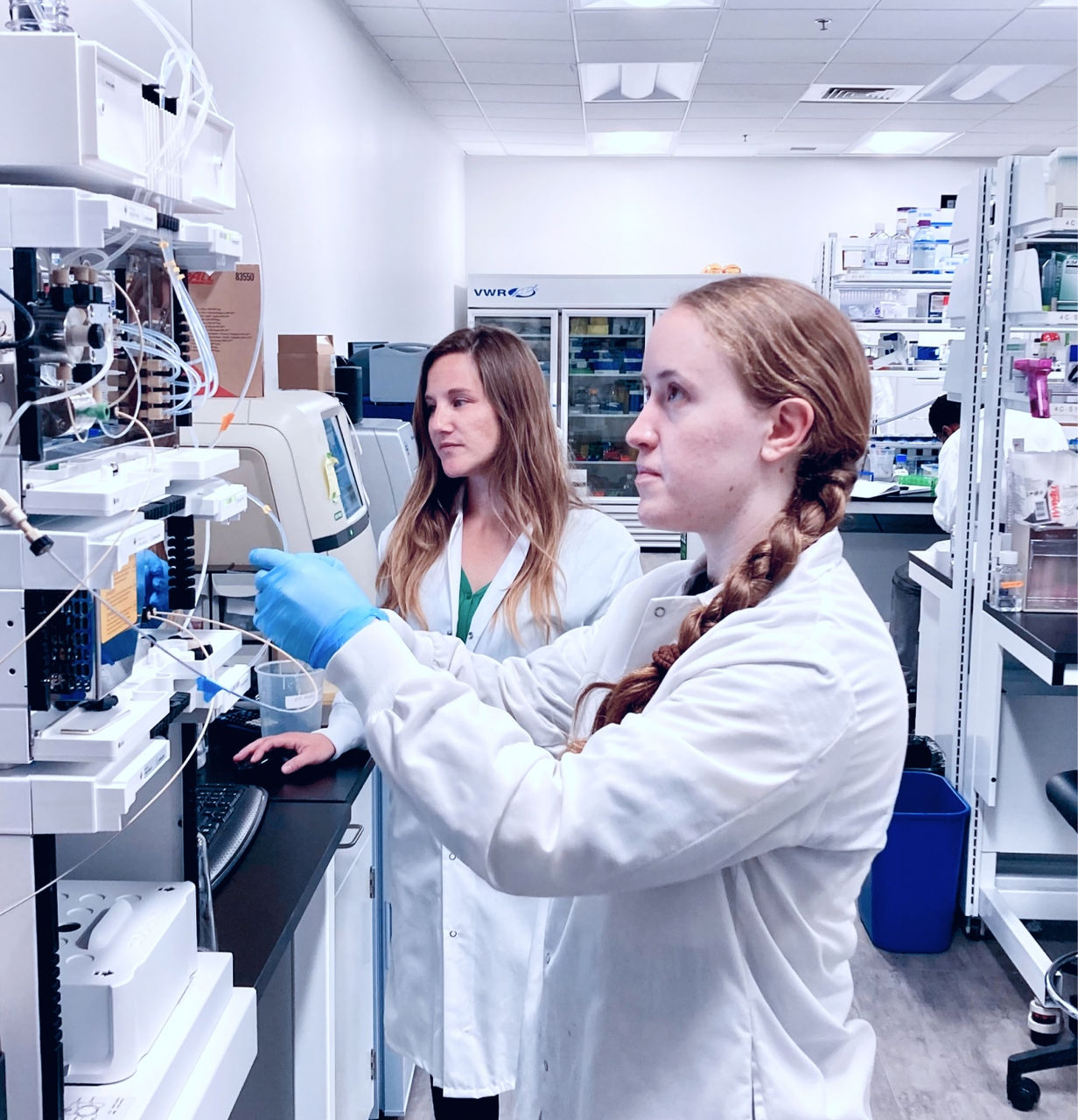
Teknova experts running a chromatography system in the lab

Find out what’s possible


Talk to our consultants today to discover custom solutions that can help you achieve your goals.


Get in touch:

1.800.209.4488

Monday to Friday

8:00AM–5:00PM PT

Contact us button